This is common with all GDI engines. And one of the primary causes of premature wear and failure. How does this occur?
Well unlike the Port Injection engines of the past, where fuel injectors introduced the fuel into the intake port at 45-55 PSI, and on the intake stroke of the piston, GDI engines introduce the fuel directly into the combustion chamber, and milliseconds before TDC when compression and cylinder pressures are close to the greatest (prior to combustion) and it is at 1,000-3,000 PSI to be able to overcome these pressures. This results in between 8 and 12 times the amount of fuel pushed past the piston rings. When this occurs not only is much of the protective oil film washed from the cylinder walls, but it also severely dilutes the engine oil, that anyone that has followed the engine failures when pushed such as track days, etc. with the far too thin of viscosity to begin with (must be specified to meet CAFE fuel economy standards), and you have a recipe for shorter life. A reason the several changes in what viscosity oil should be used for track events per GM.
What can be done to avoid this? Well for years we have been sharing this technical info with members and advised to run an oil that will help deal with this excessive fuel dilution such as Amsoil 5w50 or similar Mobil1 viscosity. But full time. GM has to be careful not to run afoul of regulators by disclosing this, but you the owners sure don't that wish to protect their engines.
GDI engines are an entire different engine with unique issues and most automatically assume what they did for their old port injection engine is sufficient for these new generation of engines, and that is far from the truth.
And a reason why we have offered the most effective and advanced air/oil separating crankcase evacuation systems on the market, design specifically for these engines.
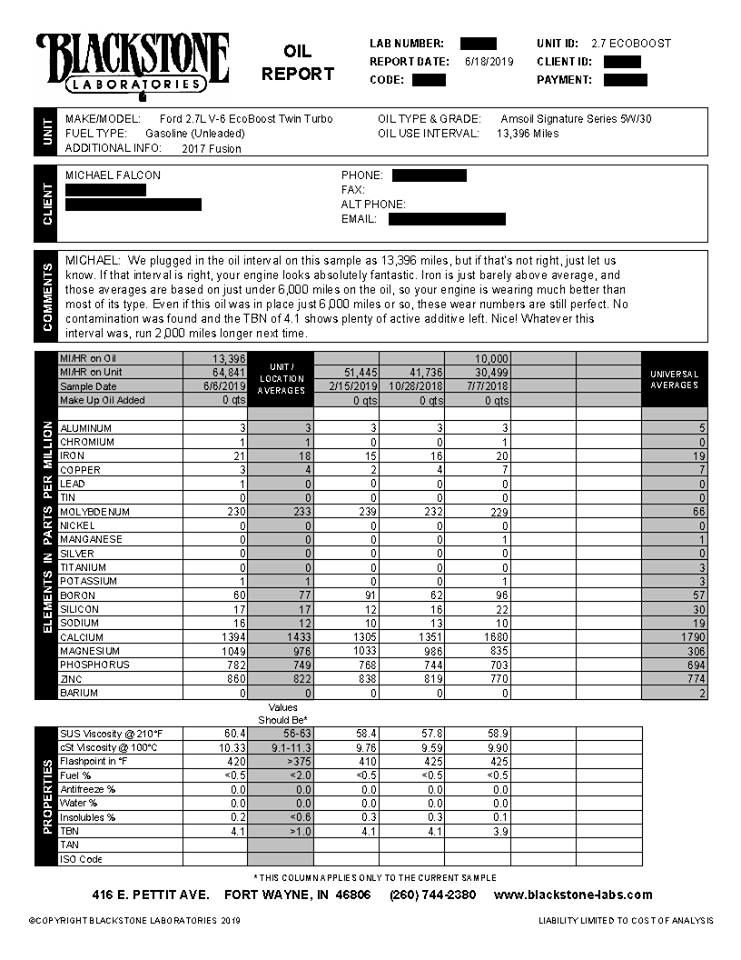
For those that have not seen our oil analysis example (and the fact this example is a twin turbo GDI engine by Ford only means it is subject to even more of these assaults' on longevity. It is making over 20# of boost and of course we only release independent results by techs that wish to verify and test our claims such as this one. Pay special attention to the lab techs comments. This is at over 13,000 miles on the SAME oil. He sends in oil samples every 5k or so miles to track:
How does the Elite E2-X family accomplish this? Well that's part of what sets these systems apart from other designs. Forst, look at any other design of "catchcans". They use the vacuum present in the intake manifold for the suction needed to evacuate these contaminants from the crankcase. That works well when at idle, light cruise, or deceleration, but anytime you accelerate or drive hard, usable intake manifold vacuum drops below usable levels due to cam lobe overlap created reversion pulses. This is the intake valves are starting to open before the exhaust valves are completely closed. This helps power by the scavenging effect of the outgoing spent gasses, but also cancels the vacuum present. So what occurs during these events? Crankcase evacuation stops and the unburnt fuel and other combustion byproducts settle and mix with the engine oil. And once mixed, most is there to stay. Today's full synthetics don't so much "wear out" as they simply can only absorb so much in the way of contaminants before they become "condemned" and need to be changed. This is one of the features setting us apart from the crowd. We use a second evacuation suction source and a series of checkvalves so no matter what the mode of operation, the crankcase is always under evacuation (sucking out these substances) before they can settle. The primary valve uses the intake manifold vacuum until that drops and the primary valve closes. The secondary valve will open and use the vacuum generated by the Venturi Effect and take over evacuation until you release the throttle and IM vacuum returns, and they switch back.
This combined with the no equal 95% effectiveness VS 15-30% of 99% (of all other designs) creates a true air/oil separating crankcase evacuation system that extends life, extends oil life, and greatly reduces the wear and failures.
Questions? Just ask. A technical discussion in order to help all to understand all aspects we feel is important for those that want to protect their investment and intend to keep it and enjoy for years to come. We also realize a certain percentage buy their cars for a year or two of use and do not wish to be bothered with more than putting in fuel, and we respect that as well.
And as always, before choosing a model simply email our Engineering and Tech Support Team direct at:
Tech@EliteEngineeringUSA.com and were there to assist. Forced induction or NA, and up to 1000 HP plus.