Lets share some info as LSPI is still a relatively unknown issue to most. Some will remember we started to talk about this, how it occurs, and how to avoid it and more. We started studying it in depth in 2010 with the 2.0T engines and ecoboost engines were having alarming amount of failures attributed to it and partial hydrolock due to poorly designed PCV systems.
It affects ALL GDI engines, but forced induction engines experience a far higher incidence. So lets examine what it is and what it does:
GDI engine introduce the fuel directly into the combustion chamber milliseconds before spark ignition. This is why a 11.5:1 compression ratio engine can run safely (not efficiently, but safely) on 87 octane. Pr-ignition is the result of the air/fuel mixture igniting prematurely from a glowing piece of carbon and/or excessive heat. So by not introducing fuel until the very last moments, most is eliminated so lower octane fuels can be used.
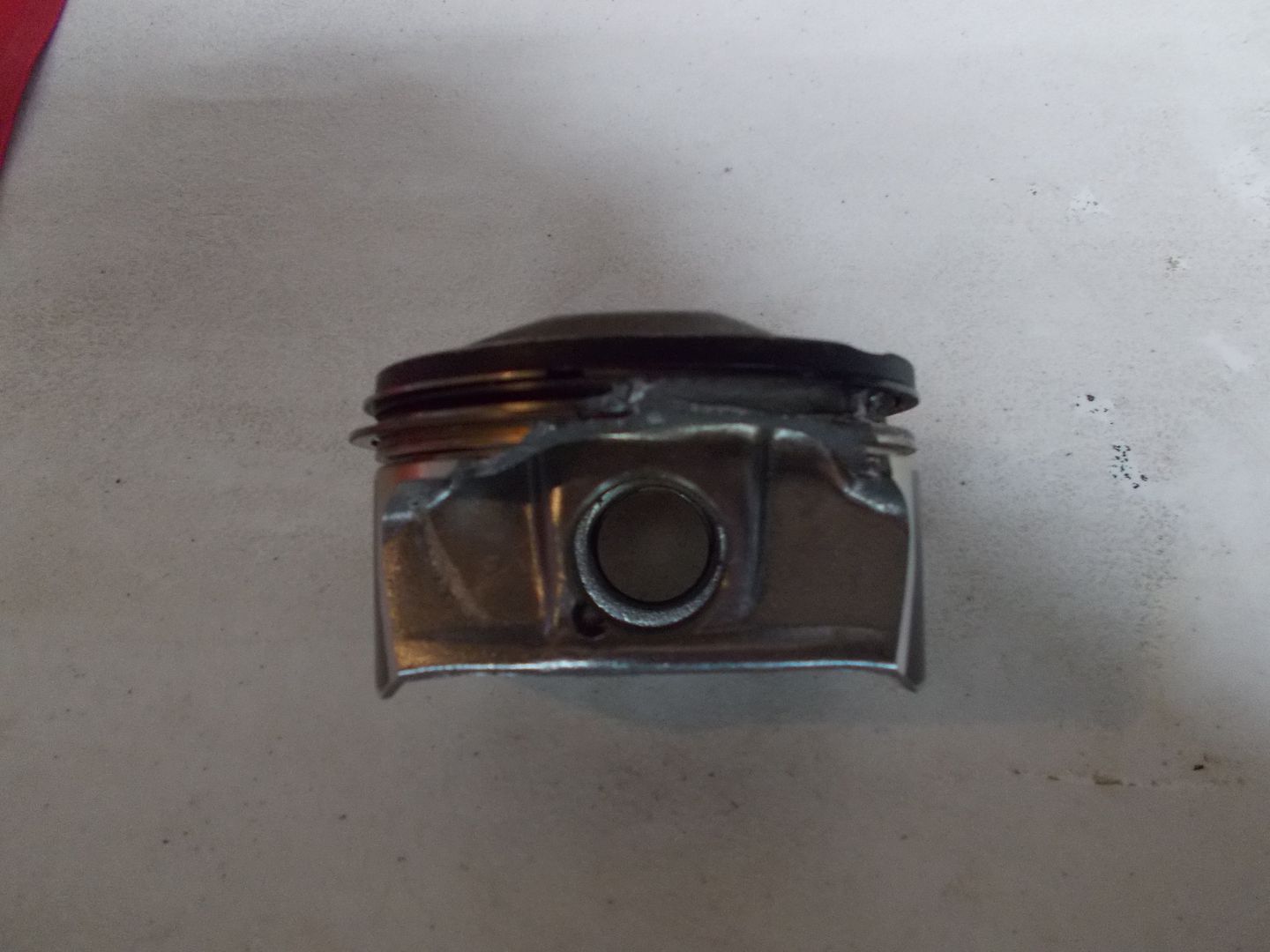
What LSPI (Low Speed Pre Ignition) is is when raw fuel is pushed past and behind the compression ring and mixes with oil vapors from a synthetic blend or a conventional oil. This mixture is extremely unstable and if ignited, results in a violent explosion that will either break the top ringland, which may stay in place and result in random misfires and or oil consumption, or in extreme cases breaks the bottom of the piston off completely. Here are some examples:
This shows when the side of the piston breaks:
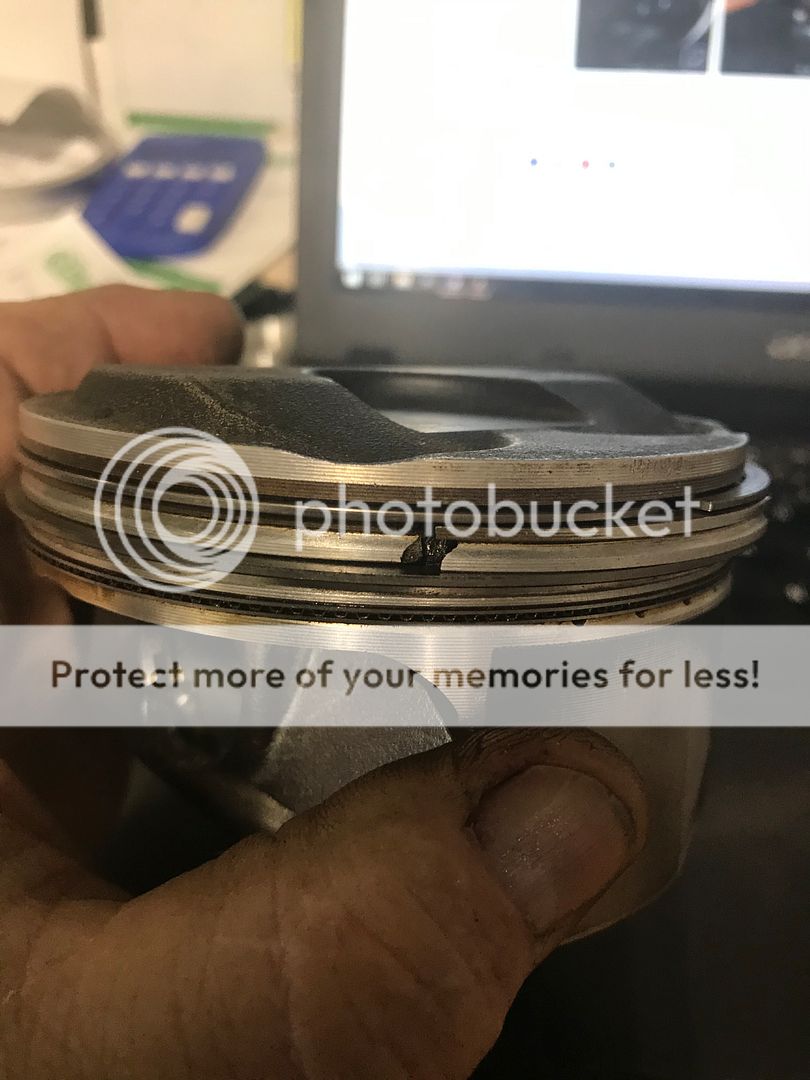
And this shows if the land breaks but stays in place. Note, your dealer will only do a compression test and it may pass that, a leak down test is needed to accurately diagnose this.
Below shows this with the ringland break visible.
As a forced induction engine applies even more pressure, this becomes more common with forced induction, but happens to ALL GDI engines if conditions are right.
How do you prevent this? First, ONLY use a quality full synthetic engine oil. I like Amsoil 5w50 Signature Series for all GDI engines as this raw fuel dilutes your already thin oils. Amsoil, M1, and a few of the other big names in Synthetics have reformulated their oil to render this mix less explosive, but does not totally eliminate it.
Our E2-X dual valve catchcan system prevents this as well as it provides full time flushing and evacuation of these vapors so it can't occur if the vapors are removed as soon as the enter.
ALWAYS use 93 octane (or 91 if you live in California) as it is far less prone to per-ignition, and you will enjoy the slight improvement in MPG and power.
Those that have been members for the duration should remember us sharing this and the intake valve coking years ago on Camaro5 with the V6's experiencing this (and several attacked us claiming this was false, and even GM came around and finally admitted the problems they first denied were now being addressed).
So again, thee are NOT the engines of the past that could be neglected and last several hundred thousand miles, and sure some get lucky, but steps must be taken if you want a good long life out of your GDI engine. And we can help.
Questions? Just ask. Were here to help.